
Qu'est-ce qu'un caillebotis en PRV (polyester renforcé de fibres de verre) ?
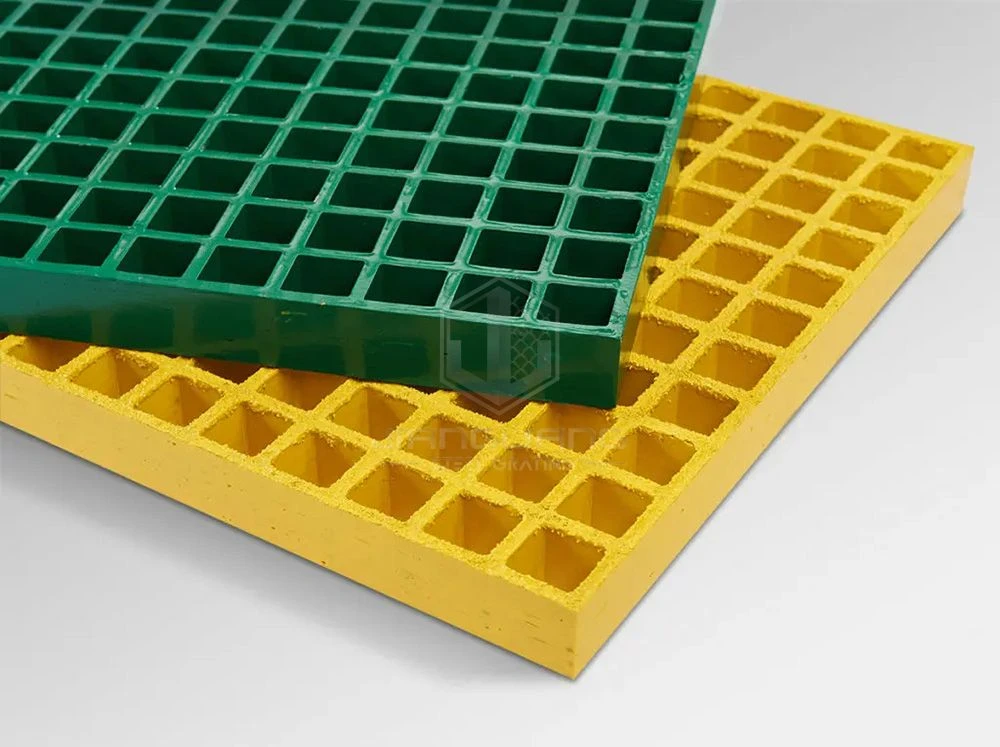
Face à des environnements industriels de plus en plus exigeants (produits chimiques plus agressifs, normes de sécurité plus strictes, durée de vie des équipements plus longue), les limites des caillebotis en acier classiques deviennent incontournables. La corrosion, la conductivité électrique et le poids important de l'acier engendrent des coûts récurrents qui s'accumulent avec le temps. caillebotis en PRV a été développé pour répondre précisément à ces problèmes.
Aujourd'hui, il est spécifié dans tous les domaines : traitement chimique, industrie pétrolière et gazière offshore, traitement des eaux usées, production d'énergie, construction maritime et industrie agroalimentaire — toute application où la combinaison de la résistance structurelle et de la durabilité des matériaux détermine le coût d'exploitation à long terme.
Qu'est-ce qu'un caillebotis en PRV (polyester renforcé de fibres de verre) ?
caillebotis en PRV Le caillebotis en plastique renforcé de fibres de verre (PRFV), également appelé caillebotis en PRV (plastique renforcé de verre) au Royaume-Uni et en Australie, est un panneau composite porteur fabriqué à partir de fibres de verre continues et d'une matrice de résine thermodurcissable. Ce matériau est mis en forme de grille et utilisé comme plancher structurel, allée, marches d'escalier, couvercles de tranchées, grilles d'évacuation et plateformes surélevées.
C’est l’approche composite qui rend ce matériau exceptionnel. Les fibres de verre, utilisées seules, sont fragiles et difficiles à travailler. La résine seule ne possède pas la résistance à la traction nécessaire aux applications structurelles. En combinant judicieusement les deux – en intégrant des faisceaux de fibres dans une matrice de résine polymérisée – on obtient un panneau à la fois léger, rigide, chimiquement inerte, électriquement non conducteur et résistant à la dégradation par les UV et l’humidité.
La géométrie en grille du panneau n'est pas le fruit du hasard. Elle est conçue pour répartir la charge sur la portée entre les poutres de support, permettre le drainage, la circulation de l'air et réduire la prise au vent – le même principe structurel qui rend les caillebotis en acier efficaces, ici dans un matériau non corrosif.
Comment sont fabriquées les grilles en PRV
Tous les caillebotis en PRV sont fabriqués à partir des mêmes deux matières premières : un renfort en fibre de verre et une résine thermodurcissable liquide. La manière dont ces matériaux sont combinés détermine les caractéristiques structurelles, le profil de résistance et le domaine d’application du produit fini. Il existe deux procédés de fabrication principaux.
La matrice de résine
La résine détermine la résistance chimique, le comportement au feu et la stabilité à long terme. résine polyester est l'option la plus économique et offre de bonnes performances dans les environnements modérément corrosifs. résine vinylester Elle offre une résistance nettement supérieure aux acides forts, aux alcalis, aux solvants chlorés et à l'eau salée — c'est la spécification standard pour les usines de traitement chimique et les plateformes offshore. résine phénolique Ce matériau est choisi lorsqu'une certification de résistance au feu (telle que la certification maritime de l'OMI) est requise, car il produit un minimum de fumée et limite la propagation des flammes en cas d'incendie.
Le renforcement en fibres de verre
Le verre E (verre borosilicaté de qualité électrique) est la fibre de renforcement standard utilisée dans les caillebotis industriels en PRV. Cette fibre confère à la matrice de résine seule la résistance à la traction et la rigidité nécessaires. La teneur en verre — généralement de 25 à 35 % en poids dans les panneaux moulés, et plus élevée dans les barres pultrudées — influe directement sur la capacité de charge et la déformation du panneau sous charge.
Caillebotis en PRV moulé vs. pultrudé
Le procédé de fabrication permet d'obtenir deux types de produits structurellement distincts. Le choix entre ces deux types est l'une des premières décisions que doit prendre un prescripteur ou un ingénieur.
Caillebotis moulé en PRV
Les panneaux moulés sont produits en disposant des couches alternées de fibres de verre continues dans un moule ouvert, en imprégnant les couches de résine et en les polymérisant sous une température contrôlée. Comme les fibres sont orientées dans plusieurs directions à travers l'épaisseur du panneau, le produit fini présente force structurelle bidirectionnelle Ce matériau supporte la charge de manière uniforme, quelle que soit sa direction. Les découpes pour le passage de tuyaux ou l'accès aux équipements peuvent être réalisées sans nécessiter de cadre supplémentaire autour de l'ouverture, car les fibres restantes assurent une résistance optimale dans toutes les directions. Le caillebotis moulé offre également la meilleure résistance aux chocs et aux produits chimiques de tous les panneaux en PRV.
Caillebotis en PRV pultrudé
La pultrusion est un procédé de fabrication en continu : des mèches de fibres de verre sont étirées à travers un bain de résine, puis à travers une filière chauffée qui façonne et durcit le matériau en barres de charge de section transversale précise (en I, en T ou rectangulaire). Ces barres de charge sont ensuite assemblées en panneaux de caillebotis à l’aide de traverses et d’un adhésif structural ou d’un système d’emboîtement mécanique. Comme toutes les fibres sont orientées dans la même direction sur toute la longueur de la barre, le caillebotis pultrudé présente force unidirectionnelle Il est nettement plus rigide et permet de couvrir des distances plus importantes entre les poutres de support qu'un caillebotis moulé de profondeur équivalente. Pour les passerelles et les plateformes surélevées supportant des charges importantes et de grande portée, les systèmes pultrudés constituent la norme.
| Propriété | Caillebotis moulé en PRV | Caillebotis en PRV pultrudé |
|---|---|---|
| Direction de la force | Bidirectionnel | Unidirectionnel (le long de la barre de charge) |
| Capacité d'étendue | Modéré | Haut — convient aux longues portées |
| résistance chimique | Plus élevée (matrice de résine continue) | Haut |
| résistance aux chocs | Très haut | Modéré |
| Tolérance de découpe sur le terrain | Parfait — aucun encadrement supplémentaire requis | Nécessite un encadrement autour des découpes |
| Applications typiques | Couvertures de tranchées, plateformes chimiques, grilles d'égout | Passerelles à longue portée, quais pour charges lourdes |
Propriétés clés des caillebotis en PRF
résistance à la corrosion
La matrice de résine durcie est naturellement inerte à un large éventail de produits chimiques industriels, notamment les acides, les bases, les composés chlorés et l'eau salée. Les caillebotis en PRV ne rouillent pas, ne se tachent pas et ne nécessitent aucun revêtement protecteur pour conserver leur intégrité structurelle en milieux humides ou chimiquement agressifs. En milieu corrosif, les caillebotis en acier peuvent se dégrader considérablement en 2 à 5 ans sans entretien régulier. Les panneaux en PRV, dans les mêmes conditions, conservent généralement leur intégrité structurelle pendant 20 à 25 ans.
Construction légère
Avec une densité d'environ 1,8 g/cm³, le caillebotis en PRV pèse environ 75 % de moins que l'acier et un tiers de moins que l'aluminium. Cette différence est immédiatement perceptible lors de la manipulation et de la pose. Les panneaux qui nécessiteraient deux personnes et des engins de levage pour être positionnés en acier peuvent être manœuvrés et installés par un seul opérateur. Sur les grands chantiers, cela se traduit par une réduction significative du temps de travail et la suppression des coûts de location d'engins lourds.
Non-conductivité électrique
Le renfort en fibre de verre et la résine durcie sont tous deux des isolants électriques. Les caillebotis en PRV sont couramment utilisés pour les revêtements de sol dans les salles d'appareillage électrique, les travées de transformateurs de sous-stations, les salles de batteries et autour des équipements de traitement haute tension – partout où la mise à la terre par le sol représente un danger ou un risque opérationnel.
Surface antidérapante intégrée
Une surface granuleuse — généralement composée d'agrégats de silice liés à la face supérieure du panneau lors du processus de durcissement — est appliquée simultanément à la fabrication du panneau. Il en résulte une surface texturée offrant une adhérence optimale en milieux humides, huileux et contaminés, sans traitement secondaire. Le granulat fait partie intégrante du panneau ; il ne s'agit pas d'un revêtement susceptible de s'user.
Faibles exigences d'entretien
Aucun programme de peinture, de galvanisation ou de traitement antirouille n'est requis. La couleur est intégrée à la formulation de la résine et ne se décolore pas, ne s'écaille pas et ne se décolle pas. L'entretien, pour la plupart des installations, se limite à un lavage périodique à l'eau. Cette caractéristique à elle seule permet de réaliser d'importantes économies sur les coûts d'exploitation tout au long du cycle de vie de l'équipement (20 ans), comparativement à l'acier peint ou galvanisé.
Capacité de travail sur site
Les caillebotis en PRV peuvent être découpés sur place à l'aide d'une scie circulaire standard équipée d'une lame à pointe carbure ou diamantée. Aucun soudage, meulage, permis de travail à chaud ni procédure de surveillance incendie n'est requis. Dans les installations industrielles en activité (raffineries, plateformes offshore, usines chimiques), cette capacité à effectuer des modifications sur site sans créer de sources d'inflammation est essentielle pour la sécurité et le bon fonctionnement des opérations.
Découvrez notre gamme complète de panneaux de caillebotis en PRV moulés et pultrudés pour applications industrielles, marines et d'infrastructures.
Voir les produits →Caillebotis en PRV vs. caillebotis en acier
L'acier demeure le matériau dominant pour les caillebotis à l'échelle mondiale. Il est robuste, largement disponible et son prix d'achat initial est inférieur à celui des PRV. Toutefois, une simple comparaison des coûts des matériaux ne suffit pas. La comparaison pertinente porte sur le coût total de possession sur toute la durée de vie de l'installation.
| Facteur | Caillebotis en fibre de verre | caillebotis en acier |
|---|---|---|
| Poids | Environ 75 % plus léger que l'acier | Lourd ; nécessite souvent une manutention mécanique |
| résistance à la corrosion | Inhérent — aucun revêtement requis | Nécessite une galvanisation ou une peinture ; sujet à la rouille |
| conductivité électrique | Non conducteur | Conducteur |
| Capacité de charge extrême | Idéal pour les piétons et les charges d'équipement modérées | Supérieur sous des charges mécaniques et de véhicules très lourds |
| résistance aux hautes températures | Limité — la résine ramollit au-dessus de ~120–150 °C | Résiste à des températures très élevées |
| coût d'achat initial | Plus élevé par panneau | Coût initial des matériaux plus faible |
| Maintenance sur plus de 20 ans | Quasi nul — aucun revêtement, aucun traitement antirouille | Revêtement régulier, traitement antirouille, cycles de remplacement |
| Durée de vie (environnement corrosif) | 20 à 25 ans avec un entretien minimal | 8 à 10 ans sans entretien actif |
Le seuil de rentabilité est généralement atteint en quelques années dans les environnements corrosifs ou humides. Les coûts de main-d'œuvre liés à l'installation sont également réduits jusqu'à 30 % lors du passage de l'acier au PRV, car les panneaux plus légers peuvent être positionnés et découpés par un seul opérateur sans équipement de levage ni permis de travaux à chaud.
Où les caillebotis en PRV sont utilisés
Les industries qui ont le plus largement adopté les caillebotis en PRV sont celles où la résistance à la corrosion, l'isolation électrique et les faibles coûts d'entretien sur l'ensemble du cycle de vie offrent la plus grande valeur opérationnelle.
Traitement chimique et pétrochimique
Les passerelles, les plateformes d'équipement, les socles de pompes et les marches d'escalier dans les usines manipulant des acides, des bases et des solvants constituent l'application classique des matériaux composites à fibres de verre (FRP). Les projections de produits chimiques, les vapeurs corrosives et l'exposition constante à l'humidité rendent l'acier peint problématique en termes de maintenance après seulement quelques années d'utilisation.
Traitement des eaux usées et de l'eau
L'humidité constante, le dosage du chlore et les composés biologiques font des caillebotis en acier un élément fréquemment remplacé dans les stations d'épuration. Les caillebotis en PRV (polyester renforcé de fibres de verre), généralement en résine vinylester, sont désormais considérés comme le revêtement de sol standard dans la plupart des nouveaux projets d'infrastructures d'eau potable et d'eaux usées.
Marine et offshore
L'immersion et les embruns d'eau salée comptent parmi les environnements les plus agressifs pour l'acier. Les caillebotis en PRV sont couramment utilisés sur les plateformes pétrolières et gazières offshore, les passerelles maritimes, les ponts de navires, les jetées, les rampes de mise à l'eau et les abords de piscines – partout où l'humidité et l'exposition au sel sont fréquentes.
Installations de production d'énergie et d'électricité
La non-conductivité est le critère de spécification déterminant. Le PRV est le matériau de choix pour les sols des salles d'appareillage de sous-station, les travées de transformateurs, les salles de batteries et les plateformes adjacentes aux équipements haute tension, où tout risque de mise à la terre accidentelle par la structure du plancher doit être éliminé.
Transformation des aliments et des boissons
La surface en résine est lisse, non poreuse, résistante à l'adhésion bactérienne et compatible avec les procédures de nettoyage utilisant des produits désinfectants commerciaux. Le caillebotis en PRV répond aux exigences d'hygiène et de résistance chimique des environnements de production alimentaire.
| Industrie / Secteur | Application principale |
|---|---|
| Traitement chimique | Plateformes, passerelles et revêtements de tranchées résistants aux acides |
| Pétrole et gaz offshore | caillebotis de pont, plateformes de têtes de puits, hélisurfaces |
| Traitement des eaux usées | Passerelles de clarificateurs, couvercles de lits filtrants, plateformes de pompage |
| Production d'énergie | Planchers pour appareillages de commutation, structures de tours de refroidissement, locaux pour batteries |
| Marin et côtier | Jetées, rampes de mise à l'eau, abords de piscine, pontons de bateaux |
| Exploitation minière | Plateformes de traitement par voie humide, zones de lixiviation acide |
| Restauration | caillebotis de production, zones de lavage |
| Transport | Passerelles piétonnes, plaques d'égout, marches d'escalier |
Quand le caillebotis en PRV n'est pas le bon choix
Il est tout aussi important de préciser les limitations que d'énumérer les avantages. Dans certains cas, les caillebotis en PRV ne constituent pas la solution appropriée.
Charges mécaniques extrêmes. Sous l'effet du trafic de chariots élévateurs, de véhicules lourds ou de charges ponctuelles concentrées dépassant la capacité de charge nominale des panneaux composites, la capacité de charge absolue supérieure des caillebotis en acier en fait le choix idéal. Les caillebotis pultrudés en PRV supportent des charges importantes pour les piétons et les engins légers, mais ne rivalisent pas avec l'acier haute résistance pour les structures accessibles aux véhicules.
Environnements à haute température. La plupart des résines composites commerciales commencent à ramollir au-dessus de 120 à 150 °C environ (selon la qualité de la résine et les additifs ignifuges utilisés). Les fonderies, les fours et les lieux exposés à une flamme directe ou à une chaleur rayonnante nécessitent l'utilisation d'acier ou de composites haute température spécifiques.
Projets de courte durée en environnements non corrosifs. Lorsqu'une structure ne sera en service que pendant quelques années dans un environnement sec et non corrosif, le coût initial inférieur des caillebotis en acier peut s'avérer plus avantageux en termes de coût total de possession avant même que les économies réalisées grâce aux PRV n'aient eu le temps de s'accumuler sur le cycle de vie.
Foire aux questions
Que signifie FRP ?
Le terme FRP signifie « plastique renforcé de fibres de verre » (ou polymère renforcé de fibres de verre). Dans le cas des caillebotis, le renfort est spécifiquement constitué de fibres de verre, et non de fibres de carbone ou d'aramide. Au Royaume-Uni et en Australie, ce même matériau est couramment appelé GRP (plastique renforcé de fibres de verre). Il s'agit du même matériau, quelle que soit l'abréviation utilisée.
Quelle est la durée de vie d'une grille en PRV ?
Avec une résine adaptée à l'environnement d'utilisation, les caillebotis en PRV conservent généralement leur intégrité structurelle pendant 20 à 25 ans avec un minimum d'entretien. En revanche, les caillebotis en acier, exposés à des environnements corrosifs agressifs, peuvent se détériorer considérablement en seulement 2 à 5 ans sans entretien régulier du revêtement protecteur et sans remplacement programmé.
Quelle est la différence entre les caillebotis en PRV moulés et pultrudés ?
Les caillebotis moulés sont fabriqués en panneaux renforcés de fibres de verre bidirectionnelles, ce qui leur confère une résistance uniforme dans toutes les directions et une haute résistance chimique. Les caillebotis pultrudés sont assemblés à partir de barres porteuses formées individuellement et renforcées de fibres unidirectionnelles, offrant ainsi une rigidité et une portée supérieures sous charge. Les caillebotis moulés sont généralement préconisés pour les environnements chimiques et les zones nécessitant des découpes ; les caillebotis pultrudés pour les passerelles structurelles de grande portée.
Est-il possible de découper sur place un caillebotis en PRV ?
Oui. Les caillebotis en PRV peuvent être découpés à l'aide d'une scie circulaire équipée d'une lame à pointe carbure ou diamantée. Aucun permis de soudage, de meulage ou de travail à chaud n'est requis. Les bords coupés doivent être scellés avec de la résine catalysée afin d'empêcher toute infiltration d'humidité aux extrémités exposées des fibres de verre. La possibilité d'effectuer des modifications sur site sans créer de sources d'inflammation constitue un avantage considérable en matière de sécurité dans les installations industrielles en activité.
Les caillebotis en PRV sont-ils glissants lorsqu'ils sont mouillés ?
Les panneaux de caillebotis industriels standard en PRV sont fabriqués avec une surface granuleuse intégrée – des agrégats de silice incorporés à la face supérieure lors de la production – offrant une adhérence antidérapante fiable même en milieux humides, huileux et contaminés. Le grain étant noyé dans la résine et non un simple revêtement, il est inaltérable. Des panneaux à surface lisse existent pour des applications spécifiques ; toutefois, pour toute surface de circulation, privilégiez toujours la version granuleuse.
Les caillebotis en PRV sont-ils résistants au feu ?
Les panneaux en PRV standard sont combustibles. Des versions ignifuges sont disponibles – utilisant de la résine vinylester ou phénolique avec des additifs ignifuges – et peuvent être certifiées conformes à des normes telles que ASTM E84 Classe 1, BS 476 et les exigences de l'OMI relatives aux équipements marins, selon le système de résine spécifié. Il est impératif de toujours vérifier la classification de résistance au feu requise dans votre juridiction et pour votre application avant toute spécification.
De quelles couleurs sont disponibles les caillebotis en PRV ?
La couleur des caillebotis en PRV est intégrée à la formulation de la résine : elle imprègne toute l’épaisseur du panneau et ne s’écaille pas, ne se décolore pas et ne s’effrite pas. Les couleurs industrielles standard comprennent le jaune de sécurité (la plus courante pour les passerelles nécessitant une signalisation visuelle des dangers), le gris, le vert et le rouge. Des couleurs personnalisées peuvent être intégrées lors de la fabrication.